AI, connected to the way your business works.

Connect AI strategy, organisational readiness, work design and governance with the people who make change happen. Build capability, support managers and make communication part of everyday adoption.

Basel, Switzerland · English, Deutsch, Français

Illustrative environmental portrait of Adriana seated with a notebook, sharing a relaxed smile after a conversation.
AI-generated portraits and illustrative scenes. Adriana’s likeness is based on her original photograph; other people and settings are fictional.
ADA STUDIO

People and change connect all five perspectives. Leadership, participation, communication and learning are part of the work from the start.

What would you like AI to make possible?

Find the support you need to choose a direction, govern AI use, test a workflow or help your team adopt it.

AI-generated portrait of Adriana in soft daylight.

Work directly with Adriana.

Independent advice, practical workshops and clear responsibility. Legal technology and governance expertise informs the work, whatever your sector.

Meet Adriana
Based in Basel, working across EuropeIndependent AI consultingEnglish · Deutsch · Français

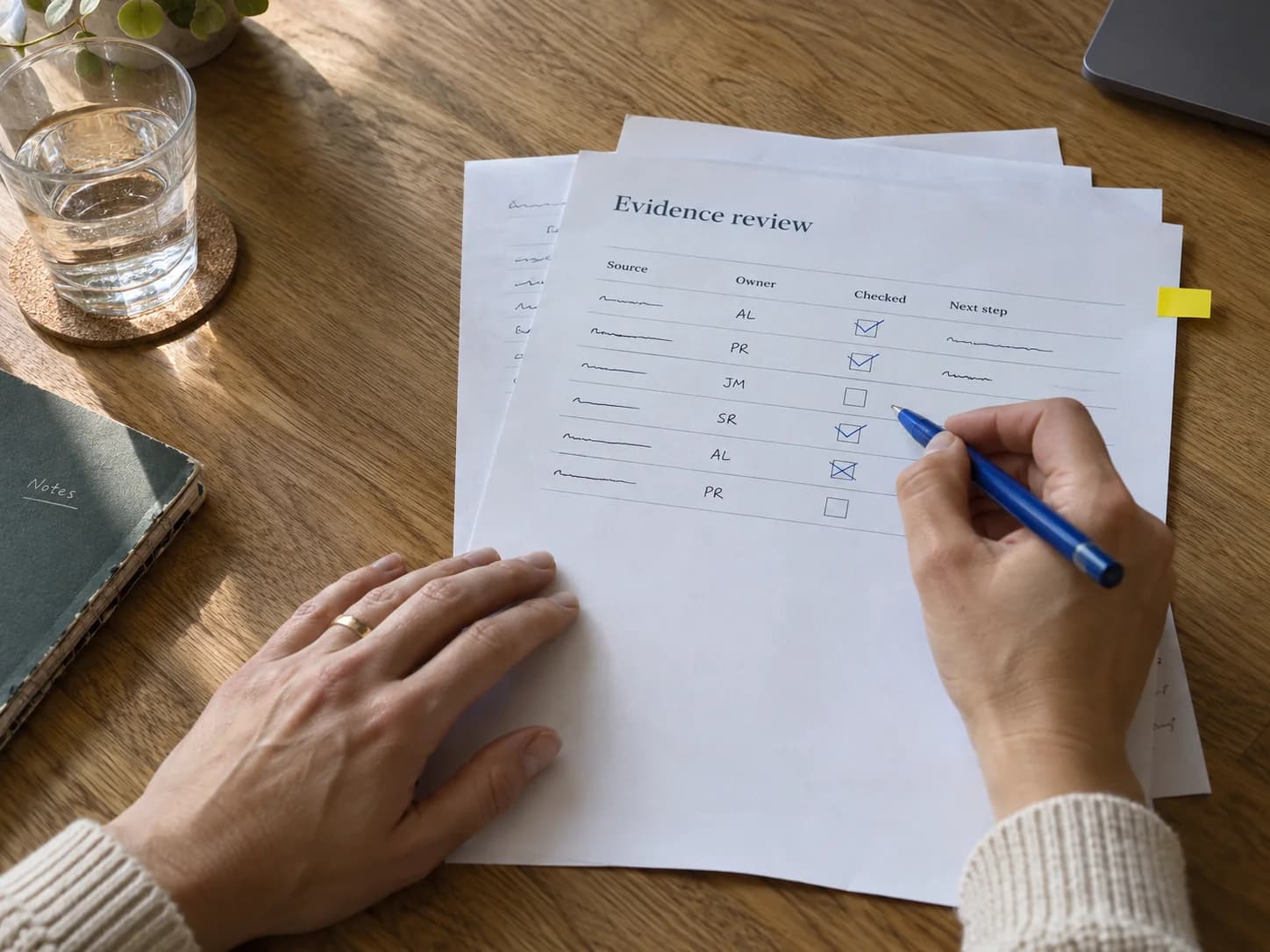
An agent can prepare. A person authorises.

An illustrative briefing workflow, with the limits made visible. Your technical team implements and verifies these controls before any real use.

A method example, not a client result or a claim of deployed software.

  1. Collect approved sources

    An allowlist selects the permitted source folder. The tool can read it but cannot edit or delete originals. Access checks fail closed.

  2. Prepare a referenced briefing

    The agent selects relevant passages and drafts a briefing with source links. It may write only to a draft area. Missing sources or conflicting evidence go to the reviewer.

  3. Approve, return or stop

    A named reviewer checks facts, omissions and intended use. The agent cannot approve its own output or grant itself more permissions.

  4. Hand off the approved version

    An application check requires recorded approval before handing the exact reviewed version to the authorised destination. Any change requires a new review.

Authority
Read approved sources, write drafts, request review. No external sending, procurement or edits to source systems.
Limits and evidence
Agree time, tool-call and cost limits before testing. Keep source IDs, draft version, tool actions, review decision and handoff record with an agreed retention period.
Exceptions and recovery
Stop on denied access, unavailable sources, exceeded limits or failed approval. The owner reviews the log and restarts from a validated checkpoint, with duplicate handoffs prevented.

A clear way to work together.

A focused engagement, with scope, timing and fees agreed before the work begins.

  1. Choose the question

    We agree what you want to improve, who is involved and what is in scope.

  2. Understand the work

    We look at the workflow, tools, data and decisions with the people doing the work.

  3. Make it usable

    You receive the agreed materials, with clear owners, review steps and practical guidance.

  4. Test and refine

    We review what changes in practice and what your team needs to carry it forward.

Good AI decisions start with the whole picture.

Good AI decisions start with the whole picture.

Business direction, work design, tools, safeguards and people shape what AI can usefully do. Start with a question; examine the connections in your context.

People and change connect all five perspectives. Leadership, participation, communication and learning are part of the work from the start.

AI-generated portraits and illustrative scenes. Adriana’s likeness is based on her original photograph; other people and settings are fictional.

Explore the AI maturity model

From experiments to strategic use.

Turn the next step into practical work.

Start where the work needs attention. These are connected capabilities, not a fixed sequence. Ownership, measurement and safeguards matter at every stage.

  1. Make current use visible

    What we work on
    Map AI use, tools, data boundaries and opportunities with the people doing the work.
    What to look for
    Named use cases and owners, a clear starting baseline, and priorities grounded in day-to-day needs.
  2. Build practices people can use

    What we work on
    Define approved ways of working, clarify review responsibilities and train people for their roles.
    What to look for
    Appropriate tool use, consistent review and guidance teams can apply without relying on one expert.
  3. Test where AI improves the work

    What we work on
    Design a scoped pilot around one useful workflow, with human review and before-and-after measures.
    What to look for
    Compare quality, time, rework, cost and actual adoption against the starting baseline.
  4. Use evidence to decide what scales

    What we work on
    Review results, prioritise the AI portfolio and turn lessons into an owned roadmap.
    What to look for
    Clear investment priorities, regular outcome reviews and internal owners able to carry the work forward.

Start with where you are.

A few sentences are enough: what you want to improve, how AI is used today, and any important timing. Adriana will review your enquiry and help clarify a useful next step.

Discuss your AI challenge

Start with the form or by email. Scope, timing and fees are confirmed after intake.

The Monday queue

Join Lena and Noah through a Monday queue, where an order question, a damaged item, and a personal data request need different kinds of care. Make five decisions, follow the consequences, and take as long as you need to read each result.

Enter the story
Tools and further reading

Selected insights

View all insights

AI Governance Readiness Assessment

Answer seven questions to understand how prepared your organisation is to adopt AI responsibly. Takes about three minutes.

Contact

Talk to Ada Studio

Have an AI adoption question? Send Adriana a short message.